
Table of Contents
- Why Harness Choice Matters for Dogs That Pull
- Front-Clip vs. Back-Clip Dog Harness: Which Design Stops Pulling
- Dog Harness Sizing Guide: Getting the Fit Right
- How to Stop a Dog From Pulling on Leash: Harness + Training
- What to Look for in a Harness for Strong Dogs
- Making the Harness Work: Training and Consistency
- Frequently Asked Questions
Last Updated: October 18, 2026
Why Harness Choice Matters for Dogs That Pull
Pulling on leash is one of the most frustrating behaviors dog owners face. It’s uncomfortable, exhausting, and often dangerous, especially with larger dogs. The right harness can transform your walks from a struggle into something manageable and even enjoyable.
Here’s what matters: not all harnesses work the same way. A standard back-clip harness actually encourages pulling by distributing the dog’s weight across the shoulders and chest in a way that makes forward momentum easier.
At K9 REVOLUTION, we work with dogs that pull every day. The first thing we address isn’t just the harness, it’s understanding why your dog pulls and which harness design matches your training approach.
The best harness for dogs that pull depends on three factors: your dog’s size and strength, your training goals, and how much time you’re willing to invest in loose-leash walking practice. This guide breaks down the options so you can choose the right one for your situation.
Front-Clip vs. Back-Clip Dog Harness: Which Design Stops Pulling
The difference between front-clip and back-clip harnesses is mechanical, and it directly impacts how your dog behaves on leash. Understanding this distinction is the foundation of choosing the right harness for your dog.
How Front-Clip Harnesses Redirect Pulling Behavior
A front-clip harness has the leash attachment point on the dog’s chest, not the back. When your dog pulls forward, the chest attachment naturally turns their body sideways toward you. This redirection is automatic, it doesn’t require your input or timing. The dog learns quickly that pulling doesn’t get them where they want to go.
Front-clip harnesses work best for dogs that are strong pullers, especially large breeds and high-drive dogs. They’re also effective for dogs in early training stages because the mechanical advantage works even if your leash technique isn’t perfect yet. Many trainers recommend front-clip designs as the first step for serious pulling problems.
The trade-off: front-clip harnesses can feel restrictive to some dogs initially. If your dog isn’t used to chest pressure, introduce it gradually during short walks before expecting full cooperation. Some dogs also learn to twist their bodies to work around the redirect, which means you’ll still need to combine the harness with training.
When Back-Clip Harnesses Work Best
A back-clip harness attaches the leash to the dog’s back, between the shoulder blades. This design is comfortable and gives your dog full freedom of movement. Back-clip harnesses are ideal for dogs that don’t pull significantly, dogs in advanced training stages, and dogs where you’re prioritizing comfort over behavior correction.
Back-clip harnesses also work well for dogs with respiratory or tracheal sensitivity, since there’s no pressure on the neck or chest. If your dog has had tracheal collapse or breathing issues, a back-clip design is often the safer choice.
The limitation: a back-clip harness provides no mechanical correction for pulling. If your dog lunges, the harness doesn’t redirect them. You’ll rely entirely on your leash handling, timing, and the training foundation you’ve built. This makes back-clip designs less suitable for strong pullers or untrained dogs.
Dual-Clip Harnesses: Flexibility for Training Transitions
Some harnesses offer both front and back attachment points. Dual-clip harnesses let you switch attachment points as your dog progresses. You might start with front-clip for the mechanical redirect, then transition to back-clip once your dog understands loose-leash walking.
Dual-clip options provide flexibility, but they add complexity. The harness is often bulkier, and switching attachment points mid-training can confuse some dogs. They work best if you’re committed to a clear progression and understand how to time the transition.
Dog Harness Sizing Guide: Getting the Fit Right
A harness that fits poorly won’t work, no matter how good the design is. An undersized harness restricts movement and causes chafing. An oversized harness allows escape and shifts during walks. Getting the fit right takes a few minutes of measurement and adjustment, but it’s essential.
Taking Accurate Measurements
Measure your dog’s chest at the widest point, just behind the front legs. Use a soft measuring tape, and keep it snug but not tight, you should fit one finger between the tape and your dog’s body. Write down this measurement in inches.
Next, measure your dog’s neck at the base, where a collar would sit. Again, one finger of slack is the target. These two measurements are what you need to select the right size.
Most harness manufacturers provide size charts based on these measurements plus weight. Weight alone is misleading because body shape varies dramatically. A lean 60-pound Greyhound and a stocky 60-pound Bulldog need different harness sizes. Use the chest and neck measurements as your primary reference.
Checking for Proper Fit and Adjustment
Once your harness arrives, put it on your dog and check three things. First, the straps should sit flat against your dog’s body without twisting or bunching. Second, you should fit two fingers (not one) under any strap, this is your comfort zone. Third, the chest attachment point (on front-clip harnesses) should sit centered on the chest, not off to one side.
Adjustable straps are crucial. Most quality harnesses have multiple adjustment points. Tighten them enough that the harness won’t slip off, but loose enough that your dog can breathe, move their shoulders, and lie down comfortably. A harness that’s too tight causes chafing and discomfort; a loose one defeats the purpose.
Check the fit every few weeks, especially with growing puppies. Harnesses wear and stretch over time, so you may need to re-tighten straps periodically. A proper fit keeps your dog comfortable and safe during every walk.
How to Stop a Dog From Pulling on Leash: Harness + Training
A harness is a tool, not a solution by itself. The best harness for dogs that pull works only when combined with consistent training and realistic expectations about how long change takes.
Loose-Leash Walking Fundamentals
Loose-leash walking means your dog walks beside you with the leash slack, not pulling, not lagging, just moving at your pace. Teaching this skill takes patience and repetition.
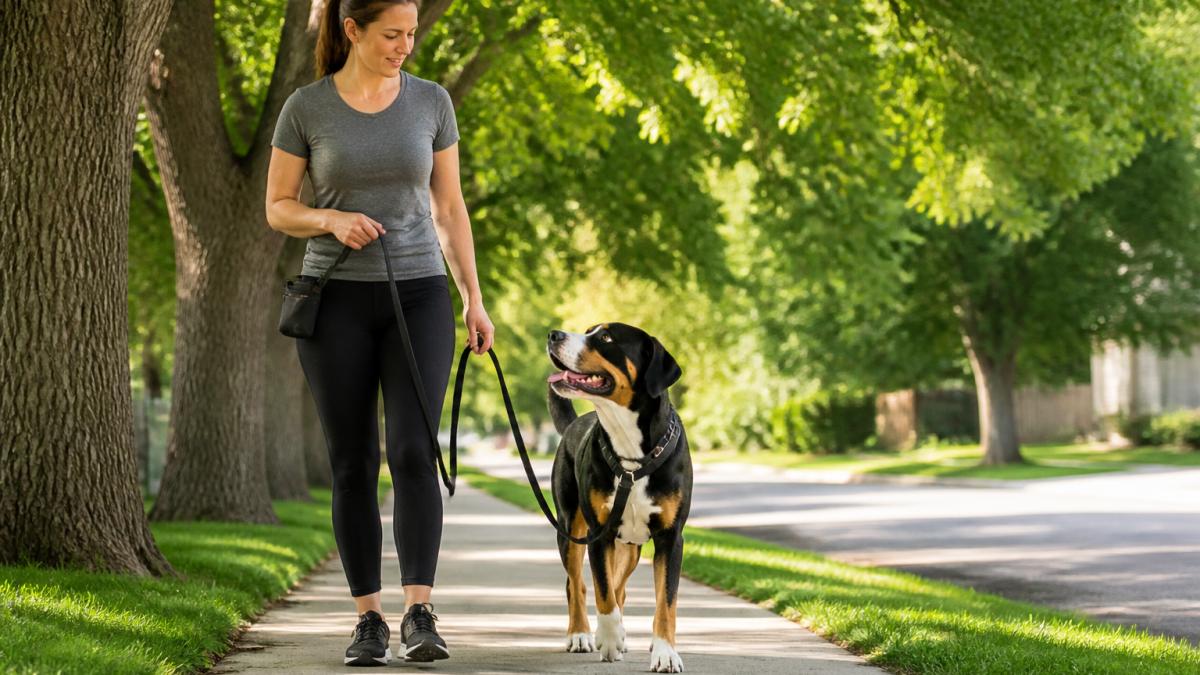
Start in a quiet, low-distraction environment like your backyard or a quiet residential street. Hold the leash with a few inches of slack. The moment your dog pulls, stop moving. Don’t jerk the leash or punish. Simply stand still.
Practice sessions should be short, 10 to 15 minutes, and frequent. Multiple short walks beat one long struggle. Most dogs start showing improvement within 2 to 3 weeks of consistent practice, though full habit change takes longer.
Common Mistakes That Make Pulling Worse
Many owners accidentally reinforce pulling. If your dog pulls and you move toward what they’re pulling toward, a dog, a person, a smell, you’ve just rewarded the pulling. Your dog learns that pulling works. This is the single most common reason dogs continue pulling despite using a better harness.
Another mistake is inconsistency. If you allow pulling on some walks but correct it on others, your dog gets confused. Training works when the rules are the same every time. Everyone in your household needs to handle the leash the same way.
Punishment-based corrections, yanking, yelling, or using aversive tools, often make pulling worse. A scared or frustrated dog pulls harder. Positive reinforcement and mechanical redirection (like a front-clip harness) are more effective and don’t damage your relationship with your dog.
What to Look for in a Harness for Strong Dogs
Strong dogs need harnesses designed for durability, security, and comfort. A harness that works for a 30-pound dog often fails with a 90-pound dog pulling with full force.
Durability and Heavy-Duty Construction
Look for reinforced stitching, especially at stress points like where straps connect to the main body. Heavy-duty webbing (at least 1.5 inches wide) distributes pressure better than thin straps and resists fraying. Metal hardware should be rust-resistant, stainless steel or powder-coated steel holds up better than cheap zinc-plated fasteners.
The best harness for dogs that pull should handle repeated pulling without tearing or weakening. Test the stitching by pulling on the straps by hand before you buy if possible. Quality construction feels solid and doesn’t flex excessively.
Escape Prevention and Security Features
A strong dog can slip out of a poorly designed harness. Look for designs where the chest strap and girth strap work together to prevent escape. The chest strap should be snug enough that your dog can’t wriggle out, but not so tight that it restricts breathing.
Some harnesses include a safety tether, a second attachment point that clips to a collar as backup. This is useful for dogs with a history of escape attempts or for situations where failure isn’t an option.
Comfort, Padding, and Freedom of Movement
Even strong dogs need comfort. Padded chest and girth straps reduce chafing and pressure points. Padding should be substantial enough to matter but not so thick that it creates bulk or heat retention.
Check that the harness doesn’t restrict shoulder movement or leg extension. Your dog should be able to walk, run, and lie down naturally. A harness that limits movement causes frustration and can lead to injury over time.
Making the Harness Work: Training and Consistency
The best harness for dogs that pull is only as effective as the training plan behind it. A front-clip harness with no training teaches your dog nothing except that their body turns sideways sometimes.
This is where many owners get stuck. They buy a better harness, hope for instant results, and feel disappointed when their dog still pulls on day one. Change takes time.
Consistency matters more than intensity. Three short practice walks per week, done the same way every time, beats one long frustrated walk per week. Everyone in your household needs to use the same technique.
At K9 REVOLUTION, we emphasize that a harness is one piece of the puzzle. The other pieces are your training approach, your timing, your expectations, and your commitment to practice.
If you’re struggling with pulling after several weeks of consistent practice, professional guidance can accelerate progress. A trainer can identify what’s working and what isn’t, adjust your technique, and help you troubleshoot specific situations.
Pulling on leash exhausts both you and your dog. If you’re ready to build that foundation with expert guidance, K9 REVOLUTION offers Board & Train programs that teach your dog loose-leash walking, focus, and real-world manners in a structured environment.
Frequently Asked Questions
Does a front-clip harness stop a dog from pulling?
A front-clip harness redirects your dog’s forward momentum toward you when they pull, making it harder for them to lunge ahead. This design discourages pulling by making the behavior less rewarding, but it works best when combined with leash training. The harness is a tool, not a replacement for teaching loose-leash walking skills. Many dogs respond quickly to front-clip designs because the physics of the redirect is immediate and consistent.
How should a no-pull harness fit a dog?
A properly fitted harness should allow one finger to slide under the straps without forcing it. The chest strap should sit high on your dog’s chest, not pressing into their armpits. Neck and shoulder straps must be snug enough to prevent slipping but loose enough that your dog can move freely. Check fit regularly, especially if your dog is still growing. An ill-fitting harness can cause chafing and reduce its effectiveness at redirecting pulling behavior.
What’s the difference between a front-clip and back-clip harness?
Front-clip harnesses have the leash attachment point on the chest, which turns your dog toward you when they pull, ideal for strong pullers. Back-clip harnesses attach at the shoulders, giving your dog more forward momentum and less steering control. Back-clip designs work better for dogs with mild pulling or those already trained to loose-leash walk. Front-clip is the stronger behavior-management tool for dogs that pull consistently.
Can a harness make a dog pull more?
An improperly fitted harness or one designed for a different purpose can sometimes increase pulling. A back-clip harness on a strong puller may actually reward pulling by allowing more forward motion. A harness that’s too loose can slip or feel unstable, causing your dog to panic or resist. Choosing the right design for your dog’s pulling style and ensuring proper fit prevents this. Pairing the harness with consistent training is essential, the tool alone won’t stop pulling without behavioral work.