
Table of Contents
- Understanding Board and Train Dog Training Cost
- How Long Is Board and Train for Dogs
- What Is Included in Board and Train Programs
- Factors That Affect Board and Train Pricing
- Are Board and Train Programs Worth It
- Questions to Ask a Dog Trainer Before Enrolling
- Frequently Asked Questions
Last Updated: October 21, 2026
Understanding Board and Train Dog Training Cost
Board and train dog training cost refers to the price of residential training programs where your dog stays with a professional trainer for a set period, receiving full-time instruction and care. Unlike group classes or weekly private lessons, board and train programs immerse your dog in a structured environment designed to build obedience, focus, and real-world reliability.
Cost structure varies by program duration, trainer qualifications, included services, and your dog’s needs. Many owners underestimate the long-term benefits of intensive training, not just immediate behavioral changes, but the foundation it creates for years of reliable behavior.
A program’s price typically reflects the trainer’s expertise, facility quality, daily care standards, and post-program support. Quality programs cost more than group classes because your dog gets individualized attention, consistent structure, and real-world training in distracting environments.
Most dog owners compare board and train solely on price per week. The real comparison should include what skills your dog actually learns, how the trainer handles problem behaviors, and what happens after your dog comes home. A cheaper program that doesn’t address your dog’s specific issues is no bargain.
How Long Is Board and Train for Dogs
The duration of a board and train program directly impacts both cost and results. Shorter programs work well for puppies or dogs with minor obedience gaps. Longer programs are necessary for behavioral modification, building off-leash reliability, or addressing aggression and reactivity.
One-Week Programs
One-week board and train programs provide a quick foundation for basic obedience. These programs typically focus on essential commands like sit, stay, down, and loose-leash walking. One-week durations work best for younger dogs without serious behavioral issues or for owners seeking a refresher course.
Your dog receives daily training sessions, socialization, and consistent structure while the trainer establishes baseline communication and foundational skills. But one week is often too short to address ingrained behavioral problems or achieve reliable off-leash work in distracting settings, it’s a starting point, not a complete solution for most adult dogs with established habits.
Two-Week and Four-Week Options
Two-week programs move beyond foundation skills into intermediate obedience and real-world application, so your dog responds reliably during walks, around other dogs, and in public settings. Two weeks is enough time to identify and begin addressing challenges like jumping, pulling, or reactivity.
Four-week programs are the standard for comprehensive behavioral modification, giving trainers time to work through problem behaviors systematically, introduce advanced skills, and make responses automatic rather than inconsistent. Many dogs show dramatic improvement by week three or four as new habits solidify.
Four-week programs are the industry standard for lasting behavioral change. Two-week programs work for well-behaved dogs needing skill development. One-week programs suit puppies or dogs with minimal issues.
Six-Week and Extended Programs
Six-week and longer programs suit dogs with serious behavioral issues, aggression, severe anxiety, extensive reactivity, or zero obedience. Extended durations let trainers build deep behavioral patterns, introduce advanced skills like off-leash reliability in high-distraction environments, and give dogs time to decompress from stress or past trauma.
Six-week programs also offer more owner coaching and transfer sessions, where you learn to maintain and build on your dog’s skills. Some dogs need the extended timeline just to adjust to a new environment and trainer before meaningful learning can occur.
What Is Included in Board and Train Programs
Not all board and train programs are structured the same way. Understanding what a program actually includes, beyond the basic price, is essential to evaluating whether it’s right for your dog.
Foundation Skills and Basic Obedience
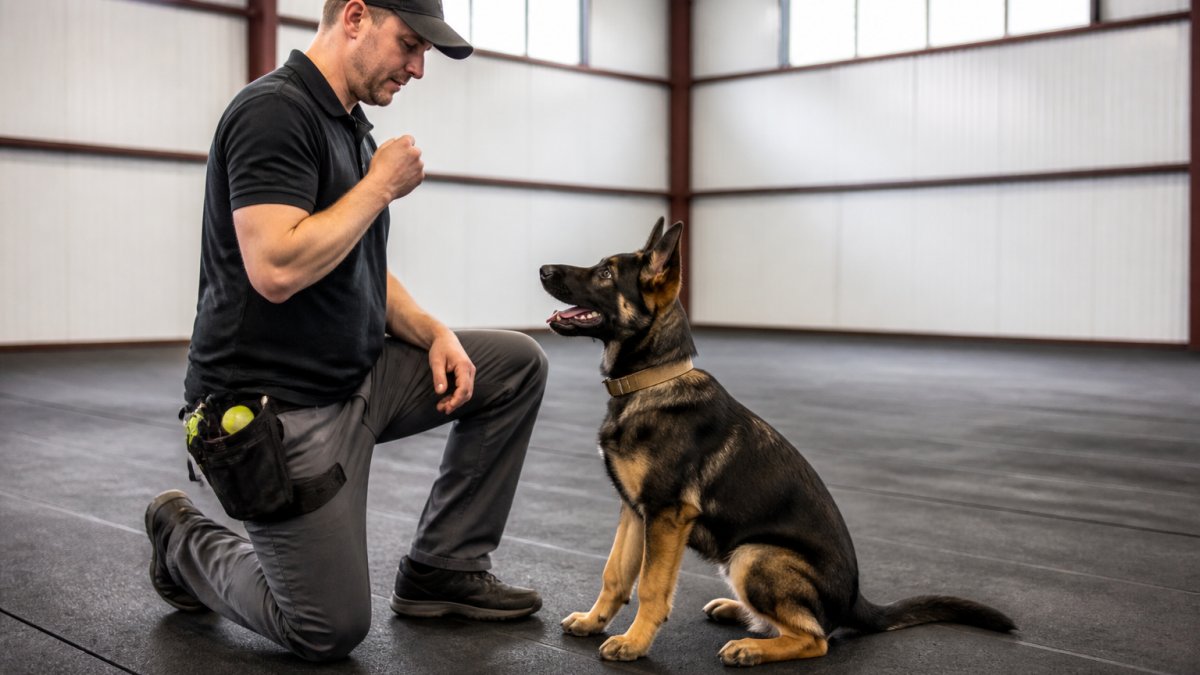
Most board and train programs teach core obedience commands: sit, down, stay, come, and loose-leash walking. These foundation skills form the basis for all other training and provide immediate practical benefit in daily life.
K9 REVOLUTION’s program includes 15 commands covering not just standard obedience but also kennel manners, meet-and-greet protocols, and impulse control around distractions. Foundation training typically involves multiple daily sessions focusing on consistency, clarity of communication, and building your dog’s understanding of what behaviors earn rewards.
Foundation training quality varies widely. Some trainers rush through basics to get to flashier skills; others know solid foundations prevent future behavioral problems.
Behavioral Modification and Real-World Training
Beyond basic obedience, quality board and train programs address specific behavioral problems: jumping on people, nipping, excessive barking, reactivity to other dogs, fear responses, and lack of impulse control. Behavioral modification requires the trainer to understand what’s driving the unwanted behavior, then systematically teach alternative responses.
Real-world training means practicing skills in actual environments, busy streets, parks, cafes, around other dogs, not just a quiet facility. This exposure builds reliability, teaching your dog that the rules apply everywhere. A dog trained only in controlled settings often reverts to old habits when facing real distractions.
Watch for trainers who claim to “fix” behavioral problems in one week. Serious behavioral issues require time, consistency, and usually ongoing owner involvement. A trainer who promises complete behavioral transformation in a short timeframe is overselling their capability.
Owner Follow-Up and Transfer Sessions
What happens after your dog comes home determines whether training sticks or fades. The best board and train programs include owner coaching and transfer sessions where you learn how to maintain and reinforce the skills your trainer has built.
Transfer sessions involve the trainer working with you and your dog together, showing you how to handle specific situations, what commands to use, and how to respond to your dog’s behavior.
Ask specifically what follow-up is included before enrolling, some trainers charge extra for owner coaching, others build it in. The quality of this follow-up often matters more than the initial training week.
Factors That Affect Board and Train Pricing
Understanding what drives board and train pricing helps you compare programs fairly and avoid underpaying for quality or overpaying for unnecessary extras.
Dog Age, Behavior History, and Training Goals
A six-month-old puppy with no behavioral issues costs less to train than an adult rescue dog with aggression or severe anxiety.
Your training goals also affect pricing. Teaching sit and stay is simpler than addressing reactivity or aggression, and off-leash reliability in high-distraction environments requires more advanced training than basic obedience.
Some programs charge a base rate then add fees for behavioral issues. Others use a tiered pricing model based on expected complexity. Understanding how a trainer assesses your dog’s needs helps you understand why pricing varies.
Trainer Qualifications and Training Methods
Trainers with advanced certifications, years of experience, and specialized problem-behavior skills typically charge more than newer trainers, a difference that usually reflects real quality. An experienced trainer can often solve problems in fewer sessions than someone still building expertise.
Training methods matter too. Some trainers use electronic collars or other aversive equipment for faster results, but that raises ethical and long-term effectiveness questions. Understanding a trainer’s methods helps you judge whether pricing reflects quality or just efficiency.
Ask about trainer credentials, experience with your dog’s specific issues, and their training philosophy.
Additional Fees and Cancellation Policies
Beyond the base fee, watch for add-ons: pickup and delivery, extra owner coaching, behavioral consultations, specialized equipment, or extended follow-up support. Some trainers charge extra if your dog requires medication or special dietary needs.
Cancellation and refund policies vary dramatically. Some trainers offer full refunds if you cancel before the program starts. Others charge a deposit that’s non-refundable. Some offer partial refunds if you withdraw mid-program; others charge the full fee regardless. Understanding these policies before enrolling protects you if circumstances change.
Ask about the cancellation policy in writing before paying any deposit. A trainer who won’t clarify their refund policy upfront is a red flag. Quality trainers are confident enough to offer reasonable cancellation terms.
Are Board and Train Programs Worth It
The value of a board and train program depends on your dog’s needs, your training goals, and what alternatives you’ve already tried.
Comparing Board and Train to Private Lessons and Group Classes
Group classes cost less per session but provide minimal individual attention. Group classes work well for puppies or dogs with minor obedience gaps but rarely solve serious behavioral problems.
Private lessons give individualized instruction but require your commitment and consistency between sessions, you’re responsible for practicing what the trainer shows you.
Board and train removes the consistency problem. Your dog trains daily with a professional for the full program duration. There’s no relying on your schedule or motivation.
Realistic Expectations and Long-Term Results
The real value is accelerated learning and the foundation it creates: your dog comes home with established skills, clearer boundaries, and new behavioral patterns. Your job is maintaining them.
Realistic expectations mean seeing board and train as an investment in your dog’s future, not a one-time fix. The best outcomes happen when owners commit to ongoing practice and reinforcement after the program ends.
Questions to Ask a Dog Trainer Before Enrolling
What specific skills will my dog learn? A good trainer can describe exactly what commands, behaviors, and skills your dog will develop.
What’s your cancellation and refund policy? Get this in writing before paying any deposit.
Can you provide references from clients with dogs similar to mine? A trainer confident in their work will provide references.
What happens after the program ends? Ask specifically about owner coaching, transfer sessions, and ongoing support. How many follow-up sessions are included?
What training methods do you use? Ask whether they use force-free, reward-based training or aversive tools.
Board and train dog training cost reflects the trainer’s expertise, program duration, included services, and your dog’s specific needs. When you’re ready to explore whether board and train is right for your dog, consult with a certified professional dog trainer to understand your options and find the right fit for your situation.
Frequently Asked Questions
What does a typical board and train program include?
Board and train programs combine full-time care with structured training. Most include daily obedience instruction, behavioral work tailored to your dog’s needs, socialization in controlled environments, and foundation skills like sit, down, stay, and leash manners. Many programs also teach off-leash reliability, impulse control, and coping strategies for reactive or anxious dogs. The program fee typically covers boarding, meals, and training sessions. Owner follow-up and transfer sessions, where you learn to handle your dog after pickup, are increasingly common but may be separate. Ask what specific commands and behaviors are included before enrolling.
How long should a board and train program be for best results?
Program length depends on your dog’s age, behavior history, and training goals. A one-week minimum gives puppies or dogs with basic obedience gaps a foundation in structure and attention. Two to four weeks allows trainers to address moderate behavioral issues like jumping, leash pulling, or mild reactivity. Six weeks or longer suits dogs with serious aggression, fear, or complex behavioral patterns that require sustained consistency and gradual desensitization. Longer programs also provide more owner training time. Discuss your dog’s specific needs with the trainer to determine the right duration.
Are board and train programs worth the cost compared to group classes?
Board and train programs and group classes serve different needs. Group classes cost less per session but require owner participation and consistency at home, they work best for dogs with basic obedience needs and engaged owners. Board and train programs provide full-time, professional structure in a controlled environment, making them more effective for puppies needing early foundations, rescue dogs with unknown histories, and dogs with behavioral challenges like aggression or severe fear. The trade-off is higher upfront cost but faster, measurable results and less owner training burden. Consider your dog’s age, behavior, and your available time.
What questions should you ask a trainer before enrolling your dog?
Ask about trainer qualifications, experience with your dog’s age and behavior type, and specific training methods used (positive reinforcement, e-collar, or hybrid approaches). Clarify what skills your dog will learn and what behaviors will be addressed. Request details on daily training time, socialization protocols, and how the facility handles dogs with aggression or fear. Ask about owner follow-up support, transfer sessions, and how they ensure your dog maintains progress at home. Inquire about their refund or cancellation policy, additional fees beyond the program cost, and whether they provide before-and-after assessments or progress updates. Ask for references or testimonials from past clients.