
Last Updated: October 25, 2026
Quick Summary
Professional dog obedience training transforms how dogs behave by teaching them what the right behavior looks like instead of just what to avoid, creating calmer, safer, and more predictable companions. Dogs learn to respond reliably to commands even in distracting environments, while owners gain confidence and reduce stress through clearer communication with their pets.
- Professional training addresses common undesirable behaviors like jumping, excessive barking, pulling on the leash, and destructive chewing by teaching appropriate alternatives.
- A trained dog with solid recall can be trusted in unpredictable situations like escaping through an open gate, making safety a real-world benefit.
- Professional training builds confidence in fearful or anxious dogs and provides mental stimulation through structured learning that reduces boredom-related destructive behaviors.
- Well-trained dogs have good manners in everyday situations, including sitting politely when guests arrive and waiting calmly at doors instead of jumping or begging.
- Board and Train programs provide round-the-clock structure and repetition that home training lacks, though owners must still practice daily to maintain results.
Table of Contents
- Why Professional Dog Obedience Training Matters
- Benefit 1: Improved Behavior and Reduced Undesirable Behaviors
- Benefit 2: Safety, Control, and Reliable Responses to Cues
- Benefit 3: Stronger Bond and Clearer Communication Between Dogs and Owners
- Benefit 4: Confidence, Enrichment, and Socialization Skills
- Benefit 5: Manners and Appropriate Behavior in Everyday Situations
- Professional Training vs. DIY: What Sets Board and Train Programs Apart
- How Positive Reinforcement Dog Training Creates Lasting Results
- Frequently Asked Questions
Why Professional Dog Obedience Training Matters
Professional dog obedience training transforms how dogs behave in everyday life. At K9 REVOLUTION, we work with dogs that struggle with basic commands, jumping, pulling on the leash, and reactivity.
When dogs receive professional training, they learn not just what to do but how to stay calm and focused amid distractions. Contact us to schedule a free consultation and discuss your dog’s training needs with one of our expert trainers. A well-trained dog is safer, happier, and easier to live with, and owners gain confidence and reduce stress.
This guide covers five concrete benefits of professional dog obedience training, why it works better than DIY for most owners, and how training creates lasting results.
Benefit 1: Improved Behavior and Reduced Undesirable Behaviors
The most obvious benefit of professional dog obedience training is behavior change. Dogs that jump on guests, nip at hands, bark excessively, or lack impulse control become calmer and more predictable.
Professional trainers address these behaviors by teaching your dog what the right behavior looks like.
This works because dogs respond to clear expectations and consistency. A professional training environment removes confusion: your dog practices the same commands the same way every day, and that repetition builds habits faster than sporadic training at home.
Common undesirable behaviors that improve with professional training include:
- Jumping on people
- Nipping or mouthing
- Excessive barking
- Pulling on the leash
- Lack of focus and responsiveness
- Destructive chewing
K9 REVOLUTION’s Board & Train program addresses these behaviors by teaching your dog 15 commands and creating clear household rules. The result is a calmer home and a dog that understands what’s expected.
Professional training addresses these common undesirable behaviors by teaching dogs what the right behavior looks like instead.
| Undesirable Behavior | What Training Teaches Instead |
|---|---|
| Jumping on people | Sit when greeting visitors |
| Nipping or mouthing | Appropriate chewing |
| Excessive barking | Calm, focused behavior |
| Pulling on the leash | Walking calmly beside owner |
| Lack of focus and responsiveness | Reliable response to commands |
| Destructive chewing | Appropriate chewing outlets |
Benefit 2: Safety, Control, and Reliable Responses to Cues
Safety is where professional dog obedience training delivers real-world value. A dog that responds reliably to commands is a dog you can trust in unpredictable situations.
Imagine your dog escapes through an open gate. A trained dog with a solid recall comes back immediately; an untrained dog keeps running. That difference can be life-or-death.
Professional training builds reliable responses through repetition in different environments. Your dog doesn’t just learn “sit” in your living room, it learns to sit when squirrels run past, other dogs are nearby, or strangers approach.
Control on the leash is another safety cornerstone. A pulling dog strains your shoulders and is unpredictable; a trained dog that walks calmly beside you is easier to manage in busy areas and around other people.
Professional training also prepares your dog for real-world scenarios:
- Meeting other dogs safely
- Staying calm around strangers
- Responding to commands in distracting settings
- Handling unexpected situations without panic
K9 REVOLUTION trains dogs to respond reliably even in distracting environments. Round-the-clock care in a structured setting means your dog practices these skills repeatedly until they become automatic.
Benefit 3: Stronger Bond and Clearer Communication Between Dogs and Owners
One of the most rewarding benefits of professional dog obedience training is the relationship shift between you and your dog. When your dog understands what you want, communication becomes clear and two-way.
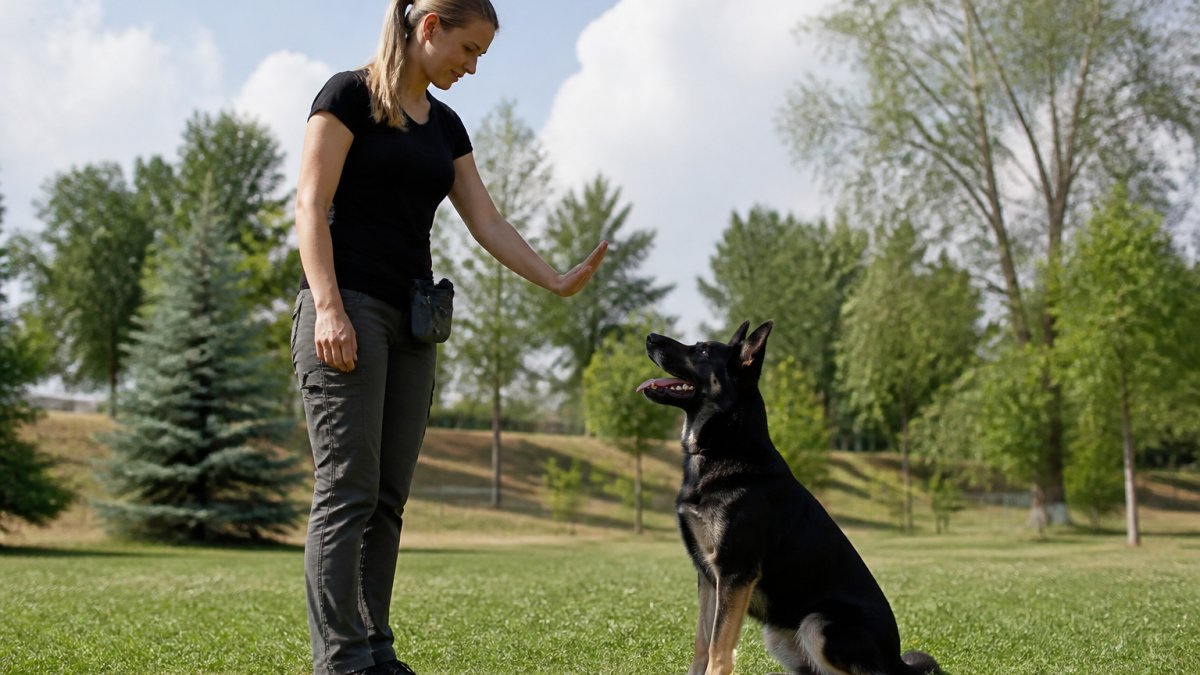
Before training, many owners feel frustrated: they give commands their dog ignores and don’t understand why.
A trained dog also shows more confidence around its owner, knowing what to expect and that the rules don’t change.
Professional training teaches owners how to communicate effectively: hand signals, tone of voice, timing of rewards, and why your dog responds to certain cues and not others.
Owners often report feeling more confident after their dog completes professional training, because they understand how their dog learns, and that confidence strengthens the bond.
Benefit 4: Confidence, Enrichment, and Socialization Skills
Professional dog obedience training builds confidence in fearful, anxious, or unsure dogs. A dog that learns commands successfully starts to believe in itself, and that confidence shows up in everyday life.
Dogs in structured training programs also get more mental stimulation than most dogs do at home. Learning commands and practicing skills keep the mind engaged, reducing boredom and the destructive behaviors that come with it.
Socialization is another critical benefit. Professional programs can expose your dog to different people, environments, and situations in a controlled way, so it can learn that new things aren’t scary and practice staying calm in busy places.
Early socialization and training prevent fear-based behaviors from developing.
Benefits of improved confidence and socialization include:
- Less reactivity to other dogs
- Calmer behavior in new environments
- Better handling at the vet or groomer
- More enjoyment of outings and adventures
- Reduced anxiety-driven behaviors
Benefit 5: Manners and Appropriate Behavior in Everyday Situations
A well-trained dog has good manners: it sits politely when guests arrive, waits calmly at the door, and lies down during meals instead of begging. These small behaviors add up to a dog that fits seamlessly into your life.
Professional dog obedience training teaches your dog what appropriate behavior looks like in every situation, including meet-and-greet protocols, leash manners, and impulse control around food, toys, and people.
Good manners make your dog welcome everywhere. You can take it to outdoor patios, hiking trails, friends’ houses, and public spaces because it behaves predictably, one of the most practical benefits of professional training.
Training also makes life easier for your family: your dog doesn’t jump on children, steal food from counters, or resource-guard toys. These behaviors are learned, and professional trainers teach them systematically.
Professional Training vs. DIY: What Sets Board and Train Programs Apart
Most owners start by training at home, watching videos, reading guides, and practicing sits and stays in the living room. Some dogs do fine; others may plateau.
What DIY training does well. Home training is inexpensive, builds daily habits, and keeps you in direct control of every rep. For a young puppy with no behavior concerns, short daily sessions of five to ten minutes, several times a day, can teach name recognition, sit, come, and loose-leash basics.
Where DIY training tends to stall. Common challenges in home training can include:
- Inconsistent criteria. One family member allows jumping up, another doesn’t. The dog learns the behavior works with some people.
- Weak generalization. The dog sits in the kitchen but not on the sidewalk. Skills practiced in one place rarely transfer without deliberate practice in new places.
- Timing and mechanics. Reward-based training depends on marking and rewarding the right behavior within roughly a second or two. Owners often reward a split-second late, which teaches the wrong thing.
What professional training adds. A professional program contributes four things home training usually lacks: structured daily repetition, controlled distraction levels, a trainer who reads body language and adjusts criteria in real time, and a plan for transferring the behavior back to you. Learn more about Board and Train dog training costs and what to expect so you can budget for professional training. Board & Train adds round-the-clock structure; private lessons coach your handling; group classes add controlled exposure. The right format depends on the behavior, the dog’s age, and how much coaching you need.
Questions to ask before enrolling. Consider the following questions:
- What training methods do you use, and can you describe them without euphemisms? Look for reward-based, force-free language and a willingness to explain what happens when a dog gets it wrong.
- What are your credentials? Ask about certifications from organizations such as the Certification Council for Professional Dog Trainers (CCPDT) and continuing education.
- How many dogs are in a group class, and what is the trainer-to-dog ratio?
- What happens after the program ends, is there a handoff session, written protocol, or follow-up support?
- Can I observe a session or see video of your training in progress?
- How do you handle fear, anxiety, or aggression, and when do you refer to a veterinary behaviorist?
What you still have to do at home. Professional training is not a substitute for daily practice. Plan on short sessions most days, consistent rules across the household, and deliberate practice in new locations. The trainer builds the skill; you maintain it.
Before you compare programs, write down the three behaviors you most want to change and rank them by safety risk. Bring that list to every trainer conversation, it keeps the comparison grounded in your dog’s actual needs rather than marketing claims.
AVSAB position statements on humane training and socialization are a useful starting point for evaluating whether a program’s methods align with current welfare guidance.
How Positive Reinforcement Dog Training Creates Lasting Results
Positive reinforcement training rests on a simple principle: behavior followed by something the dog wants becomes more likely to happen again.
The mechanics, in plain terms. A trainer identifies what the dog will work for, food, toys, praise, access to a smell or a person, and delivers it immediately after the desired behavior.
Why it produces lasting results. Reward-based training builds a history of reinforcement for the behavior you want. The dog is not just avoiding punishment; it is actively choosing the behavior because that behavior has paid off before.
What humane practice looks like, and what to watch for. The AVSAB position statement advises against aversive methods and equipment that rely on fear, pain, or intimidation, and recommends reward-based training as the default. When evaluating a program, ask:
- Does the trainer explain what the dog is being rewarded for, not just what it is being stopped from doing?
- Are aversive tools (shock, prong, or choke collars) used, and under what circumstances?
- How does the trainer handle a dog that is fearful or reactive, with distance and desensitization, or with correction?
- Is there a written plan for fading treats and rewards so the behavior holds without constant food?
The handoff matters. Effective programs teach owners the mechanics, marker timing, reward placement, criteria-setting, to help maintain behavior after the program ends. Our Graduate Group Training Program provides ongoing support to help you maintain your dog’s training results.
Reward-based training works because it builds a reliable history of reinforcement, and it holds up best when criteria are raised gradually, progress is measured, and the owner is taught the mechanics. Judge a program by its methods and its handoff, not by its promises.
AVSAB humane training position statement and Certification Council for Professional Dog Trainers are useful references for evaluating a trainer’s methods and credentials.
Frequently Asked Questions
What are the main benefits of professional dog obedience training?
Professional dog obedience training improves behavior, creates safety and control, strengthens your bond with your dog, builds confidence, and teaches manners for everyday situations. Dogs learn reliable responses to commands even in distracting environments. You also gain the knowledge and support to maintain progress at home through a lifelong training partnership.
How long does dog training take to see real results?
Results depend on your dog’s age, existing behaviors, and training intensity. Consistency at home after professional training is essential.
Is professional dog training worth the investment compared to group classes?
Professional training, especially Board and Train programs, offers round-the-clock structure, personalized attention, and real-world scenario practice. K9 Revolution offers a lifelong training partnership.
Can professional trainers handle aggressive or reactive dogs?
Yes. Professional trainers can work with reactivity, fear, and aggression through structured environments and evidence-based methods. They assess your dog’s specific triggers, create a customized training plan, and teach you management strategies for home. Results depend on consistency and follow-up support.
