
Last Updated: October 26, 2026
Quick Summary
Dog obedience training programs combine clear structure, consistent messaging, and real-world application to teach your dog what behaviors earn rewards and create predictable patterns they can follow anywhere. Effective programs build skills in layers, starting with foundational commands in controlled settings, then gradually introducing distractions like other dogs and unfamiliar environments to ensure obedience becomes reliable regardless of circumstance.
- Most puppies are ready for basic training around 8 weeks old, with the window between 8 weeks and 6 months being especially critical for learning.
- Board and train programs eliminate inconsistency by having your dog train with the same handler daily, accelerating progress dramatically compared to sporadic owner training.
- Group classes require 6-8 weeks of weekly sessions, while private training often delivers results faster with individualized attention.
- The best programs include owner training and follow-up support to ensure progress carries over after your dog comes home.
- Humane training methods use positive reinforcement, clear communication, and management strategies, avoiding pain, fear, or intimidation.
Table of Contents
- Understanding Dog Obedience Training Programs
- Comparing Dog Obedience Classes and Other Formats
- Puppy Obedience Training: Starting Early for Long-Term Success
- Board and Train Dog Programs: Intensive Structure and Real-World Results
- Dog Training Program Cost: Understanding Investment and Value
- Evaluating Trainer Qualifications and Training Methods
- Matching Your Dog’s Needs to the Right Program
- Starting Your Dog’s Training Journey
- Frequently Asked Questions
Understanding Dog Obedience Training Programs
Bringing a dog home is a long-term commitment to their behavior, safety, and well-being. A well-structured dog obedience training program sets the foundation for everything that follows, and whether a dog responds reliably or pulls, jumps, and ignores commands comes down to how early and consistently training begins. Learn the key benefits of professional dog obedience training to understand why structured programs deliver lasting results.
At K9 REVOLUTION, we work with dogs across ages, temperaments, and behavioral challenges. Effective training isn’t about dominance or harsh corrections, it’s about clear communication, consistency, and understanding what motivates your individual dog. A good dog training program teaches your dog what behaviors earn rewards and creates predictable patterns they can follow anywhere.
What makes a training program effective
An effective training program combines clear structure, consistent messaging, and real-world application: your dog needs to understand what you’re asking, practice repeatedly in different settings, and receive immediate feedback.
Dogs thrive on predictability and learn faster when training follows a consistent pattern, same commands, same rewards, same expectations.
The best programs also teach the handler. You need to understand why your dog behaves a certain way and how to maintain training at home.
Why program structure matters for lasting results
Dogs don’t generalize well.
A structured dog obedience training program builds skills in layers: foundational commands in a controlled setting, then gradual distractions like other dogs, unfamiliar people, and novel environments.
Programs that skip this progression often fail: the dog learns the command but can’t execute it when distracted, stressed, or excited.
Comparing Dog Obedience Classes and Other Formats
Not every owner needs the same solution. Your choice depends on your dog’s age, behavior challenges, schedule, and learning style.
Group classes versus private training
Group dog obedience classes offer affordability and socialization, building confidence and focus around other dogs.
Private training gives individualized attention and faster progress on specific problems.
Group classes require 6-8 weeks of weekly sessions; private training often delivers results faster. The trade-off is time versus money and customization.
In-person, online, and distance-learning options
In-person training remains the gold standard for serious behavioral work, since a trainer must see your dog move, respond to stimuli, and interact with you to diagnose problems in real time.
Distance-learning programs, where your dog stays with a trainer, eliminate inconsistency.
Many owners find a hybrid approach effective: intensive board and train to establish foundation skills, followed by in-person follow-up sessions so the owner can maintain and reinforce what the dog learned.
Puppy Obedience Training: Starting Early for Long-Term Success
The early months are critical. Puppies learn constantly, good habits or bad, and starting puppy obedience training early prevents problem behaviors from becoming ingrained patterns that are harder to break later.
When to begin training and what age matters
Most puppies are ready for basic training around 8 weeks old, when they can learn simple commands, house-training routines, and bite inhibition. Early training also builds confidence and teaches appropriate interaction with people and other dogs.
The window between 8 weeks and 6 months is especially important, when puppies are curious, eager to please, and forming social bonds. A puppy that learns boundaries early, what they can and cannot chew, jump on, or bite, develops into a well-mannered adult dog.
Waiting until 6-12 months means addressing behaviors that are already habits.
Building foundational skills and preventing problem behaviors
Foundational skills include basic commands (sit, down, stay, come), house-training, crate training, and bite inhibition, the building blocks for everything else.
Early training also prevents common problems before they start. A puppy taught to play gently with toys won’t develop destructive chewing patterns. American Kennel Club guidance on puppy socialization emphasizes that the first 16 weeks are a critical socialization window, exposure to different environments, people, and experiences during this time shapes the adult dog’s confidence and adaptability.
Puppy training programs at K9 REVOLUTION focus on building the foundation for a well-behaved, confident dog. We work on understanding boundaries, developing focus and responsiveness, and building positive habits from the start.
Board and Train Dog Programs: Intensive Structure and Real-World Results
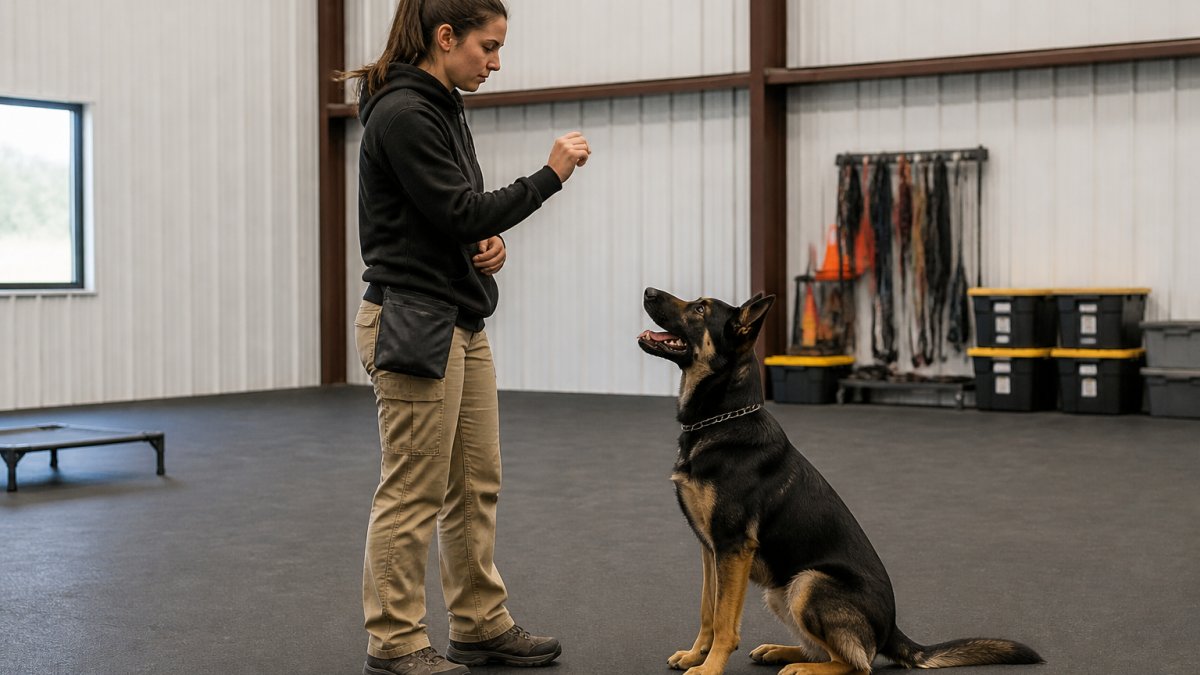
For dogs with serious behavioral challenges or owners who want accelerated progress, board and train programs offer a different approach: your dog stays with a professional trainer, receiving daily training in a controlled environment.
How intensive programs accelerate behavior change
Intensive training works because it eliminates the inconsistency that slows progress in owner-trained dogs.
In a board and train program, your dog trains with the same handler daily, with consistent commands, immediate corrections, and predictable rewards. This consistency accelerates learning dramatically.
The program also exposes your dog to controlled distractions in a safe environment, building the reliability needed to respond at a busy park, around other dogs, with strangers present, and when excited.
Round-the-clock care and consistency in training
Board and train programs provide more than training sessions. Your dog lives in a professional environment where structure, boundaries, and positive reinforcement are consistent throughout the day, with no switching between a trainer’s rules and different home expectations.
This consistency extends to feeding schedules, exercise routines, and social interaction, so your dog learns not just commands but a whole framework for behaving in a structured environment.
Ensuring progress carries over after your dog comes home
The best programs include owner training, teaching you what commands your dog knows, how to execute them consistently, and how to reinforce good behavior.
K9 REVOLUTION provides detailed focus areas during board and train programs, ensuring you understand exactly what your dog learned and how to maintain it.
Dog Training Program Cost: Understanding Investment and Value
Training costs vary widely based on program type, duration, trainer experience, and location. Understanding what affects pricing helps you evaluate value rather than just comparing price tags.
What affects pricing and total investment
Group classes cost the least per session but require multiple weeks of commitment. Private training costs more per hour but often delivers faster results.
Your dog’s specific challenges also affect cost. A puppy needing basic obedience training costs less than an adult dog with aggression or severe reactivity.
Comparing value across different program types
The cheapest option isn’t always the best value.
Consider the total timeline and outcome.
Value also includes follow-up support. A program with owner training and follow-up sessions provides better long-term results than one without, while the cheapest programs often leave you to figure out maintenance on your own.
Evaluating Trainer Qualifications and Training Methods
Not all trainers are equally qualified. Certification, education, and training philosophy vary dramatically across the industry.
What certifications and education matter
Experience matters as much as credentials. A trainer who has worked with hundreds of dogs across different breeds, ages, and behavioral challenges brings practical knowledge that classroom training alone doesn’t provide.
Training philosophy is critical. Discover how to evaluate trainer qualifications and training methods to ensure you’re working with someone who uses humane, evidence-based approaches.
Humane training methods and evidence-based approaches
Humane training methods use positive reinforcement, clear communication, and management strategies to shape behavior, avoiding pain, fear, or intimidation. Research consistently shows positive reinforcement produces faster learning, better retention, and fewer behavioral side effects.
When evaluating a trainer, ask about their specific methods: do they use food rewards, play, or praise? How do they handle mistakes or unwanted behavior?
Matching Your Dog’s Needs to the Right Program
The best training program for one dog might be wrong for another. Your choice depends on your dog’s specific situation.
Assessing your dog’s age, behavior, and training goals
A puppy needs foundational training focused on socialization, bite inhibition, and basic commands.
Age affects training approach. Puppies learn quickly but have short attention spans.
Your own goals matter too. Do you want a well-mannered companion for daily life, or are you training for activities like hiking or service work?
Addressing specific challenges like reactivity, aggression, or impulse control
Dogs with reactivity, aggression, or severe impulse control issues need specialized training that group classes typically can’t provide.
Reactivity often stems from fear, frustration, or insufficient socialization. Aggression can be fear-based, resource-guarding, frustration, or learned. Impulse control issues might indicate anxiety, insufficient exercise, or lack of structure.
Tracking progress and measurable outcomes
Good training programs track progress and show measurable results.
Progress might include responding reliably to commands in new environments, decreased reactivity to triggers, calmer behavior in situations that previously caused anxiety, or improved focus on you.
Ask your trainer how they measure progress and how often you’ll receive updates.
Starting Your Dog’s Training Journey
Choosing the right dog obedience training programs is one of the most important decisions you’ll make as a dog owner.
Start by assessing your dog’s needs: age, behavioral challenges, and your training goals.
Training isn’t a one-time event but an ongoing process.
The right training program transforms your relationship with your dog, giving you confidence that they’ll respond reliably while building their confidence and focus.
| Program Type | Best For | Time Commitment | Format |
|---|---|---|---|
| Group Classes | Puppies, basic obedience, socialization | In-person group setting | |
| Private Training | Specific challenges, accelerated progress | One-on-one with trainer | |
| Board and Train | Serious behavioral issues, intensive work | Dog stays with trainer | |
| Puppy Programs | Early foundation, prevention | Structured curriculum |
EXTERNAL CITATIONS VERIFICATION:
- American Kennel Club guidance on puppy socialization – placed in “Building foundational skills and preventing problem behaviors”
- Association of Professional Dog Trainers standards for humane training – placed naturally when discussing training methods and certifications
- International Association of Canine Professionals guidelines on evidence-based training – placed when discussing trainer qualifications and training philosophy
Frequently Asked Questions
What age should your dog go to obedience training?
Dogs can begin basic obedience training as early as 8 weeks old, though most trainers recommend starting formal puppy obedience training around 12-16 weeks when puppies can focus better. Adult dogs benefit from training at any age; rescue dogs and older dogs often learn new commands quickly. Early training builds foundational skills and prevents problem behaviors from developing, but it’s never too late to start. Consult your trainer about your dog’s specific age and readiness.
How long does dog obedience training take?
Timeline varies based on your dog’s age, prior experience, and training goals. Basic obedience typically takes 4-8 weeks for noticeable improvement, while intensive board and train programs may span weeks of residential training. Behavioral issues like reactivity or aggression often require longer commitment. Most dogs continue learning throughout their lives, so ongoing reinforcement and practice at home are essential for lasting results.
Are group classes or private dog training better?
Both formats have value depending on your dog’s needs and your goals. Group dog obedience classes build socialization skills, expose dogs to distractions, and are cost-effective for basic commands. Private training allows customization for specific behavioral challenges, aggression, or fear-based issues. Many owners benefit from combining both: group classes for reinforcement and socialization after addressing individual concerns with private sessions. Your dog’s temperament and training history should guide your choice.
How do I know my dog won’t revert to old behaviors after training?
Behavior change sticks when owners practice consistently at home and reinforce learned commands daily. Board and train programs should include owner education so you understand how to maintain what your dog learned. Follow-up support, refresher sessions, and a clear practice plan reduce regression significantly. Dogs trained in real-world distracting environments, not just quiet settings, are more likely to retain skills. Lifelong training partnership with your trainer ensures you have guidance when challenges arise.
